
NYXIUM
Backed By: EWOR | VISIONARIES TOMORROW
UNDERSTAND, COMPARE, AND MANAGE THE RISKS THAT DETERMINE WHETHER PROJECTS GET BUILT
END TO END PLATFORM. EVERY SITE SCORED, SCREENED, AND MONITORED ACROSS THE FULL PROJECT LIFECYCLE.

EVERY FACTOR THAT KILLS A PROJECT.
DERISK BEFORE YOU COMMIT.

GRID ACCESS. PERMITTING RISK. LAND CONSTRAINTS. COMMUNITY OPPOSITION. ENVIRONMENTAL EXPOSURE. INFRASTRUCTURE GAPS. ECONOMIC VIABILITY. SCORED TOGETHER - NOT IN SEQUENCE, NOT IN SILOS. MOST SITE FAILURES ARE PREDICTABLE. THE DATA EXISTED. IT JUST WAS NOT CONNECTED.
POWER & GRID
Substation capacity, substation proximity, connection queue, and curtailment risk - before any capital is committed.
PERMITTING
Active policy signals, approval timelines, and jurisdictional risk - mapped at parcel level.
COMMUNITY
Local sentiment, opposition history, and socioeconomic context scored before engagement begins.
ENVIRONMENT
Protected areas, flood risk, contamination, and environmental sensitivity - flagged early.
WATER
Water scarcity, aquifer stress, and regional usage policy - mapped against project demand before permitting begins.
ECONOMIC
Incentive zones, labour, and offtake signals weighted against project type.
GEOSPATIAL
Satellite-derived land analysis, over 40 geospatial data sets, topography, and computer vision screening - the foundation every other dimension builds on.


From first screen to full lifecycle. one continuous system


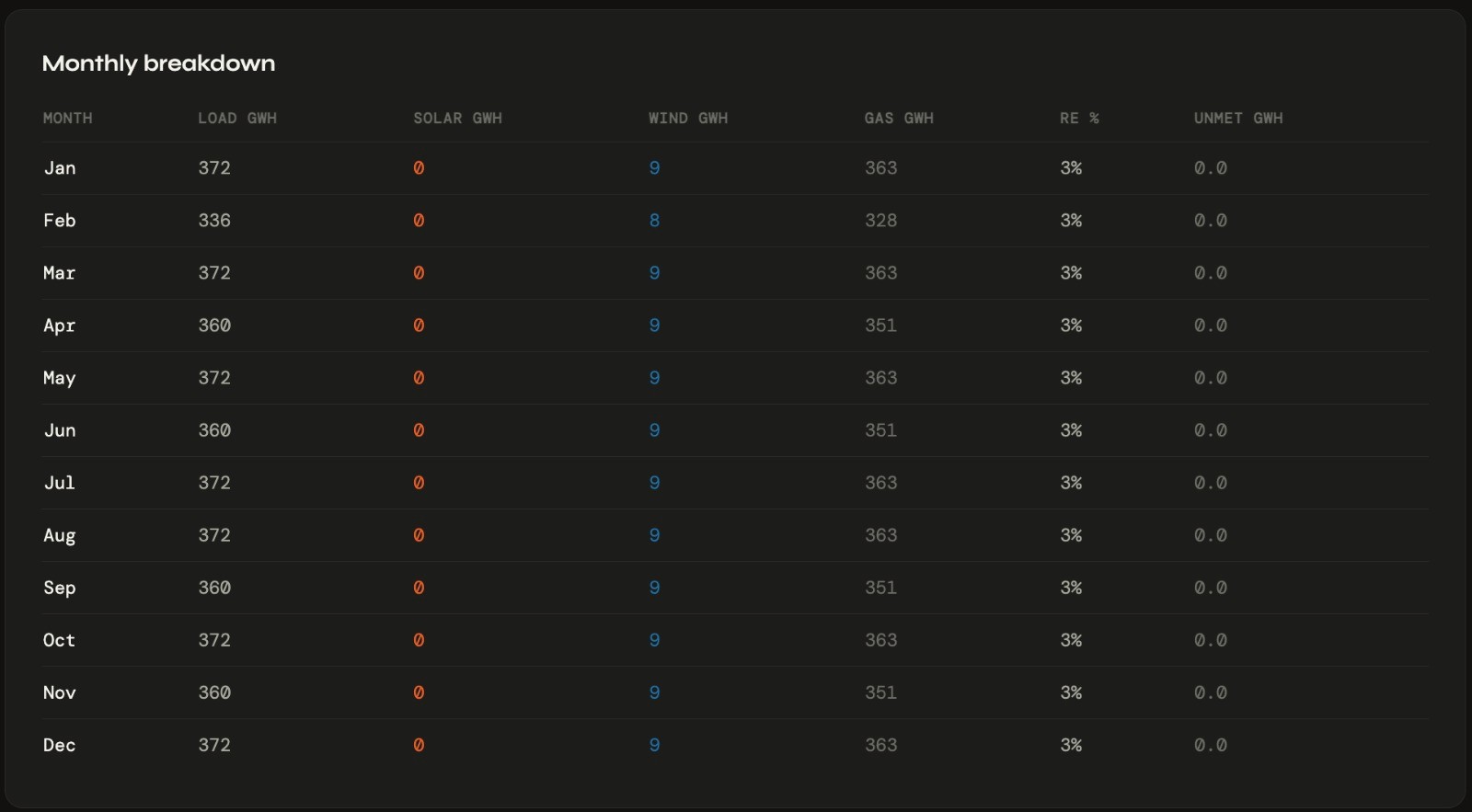
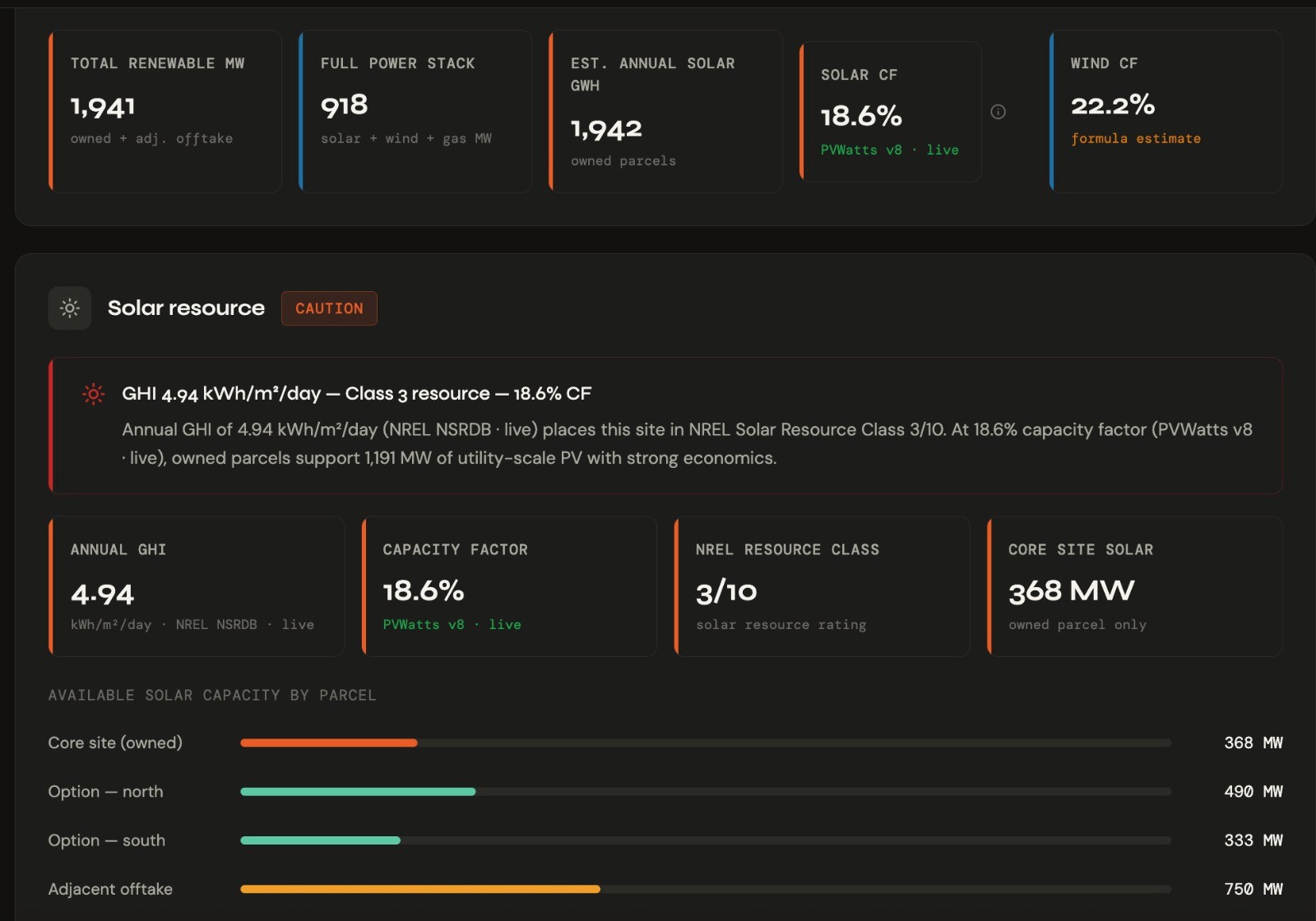
Manual site diligence and static reports leave risk exposure ongoing between updates. Nyxium adds live, cited, continuously monitored intelligence on top of the expertise your team already has.
SITING TOOLS AND STATIC REPORTS
Site selection happens, then the trail goes cold. Reports capture a moment in time, but nothing keeps tracking the project once the decision is made.
scope
ENDS AT SITE SELECTION
ANALYSIS
USER-DRIVEN FILTERS AND RANKINGS
PROVENANCE
UNCITED SCORES
LEARNING
NO OUTCOME FEEDBACK
SITE SCREENING TOOLS HAND OFF ONCE THE SITE IS CHOSEN
PERMITTING, COMMUNITY, AND COMPLIANCE MANAGED IN SEPARATE SYSTEMS
OUTPUTS DIFFICULT TO AUDIT IN FRONT OF INVESTORS OR REGULATORS
NO VISIBILITY INTO WHETHER PAST RECOMMENDATIONS DELIVERED
NYXIUM
Infrastructure intelligence that works alongside your team across the full project lifecycle, bringing fragmented project signals into one place, benchmarking them across sites, continuously tracking material changes, and giving you the workflows and tools to respond, so your expertise goes further, with every output cited and confidence-scored
SCOPE
SITING THROUGH OPERATION
ANALYSIS
AI supports industry experience and expertise
PROVENANCE
CITED AND CONFIDENCE-SCORED
LEARNING
analysis adapts as situations change
ONE SYSTEM OF RECORD FROM PRE-COMMITMENT THROUGH COMPLIANCE
POWER, PERMITTING, COMMUNITY, AND ENVIRONMENTAL RISK ASSESSED TOGETHER
AUDIT-READY OUTPUTS FOR INVESTMENT COMMITTEES AND REGULATORS
CONTINUOUS MONITORING AND MILESTONE TRACKING
CLEAR ANSWER TO COMMON QUESTIONS
Essential details on coverage, accuracy, and platform capability before deployment.
Experience that builds things.
Our team draws on deep institutional experience across energy, environment, infrastructure, and system intelligence.

Harvard

MIT

Imperial College London

University of Cambridge

Harvard Innovation Labs

Idaho National Laboratory

Oracle
DEPLOY YOUR NEXT PROJECT
Get continuous risk visibility across your entire development lifecycle, from site selection to operation.
NYXIUM
WHERE THE WORLD BUILDS
Office: fora the jellicoe 5 Beaconsfield St, London N1C 4EW, United Kingdom
+447388 683883 clients@nyxium.ai
STAY INFORMED ON INFRASTRUCTURE INTELLIGENCE.